May
is recognized as Celiac Disease Awareness month in several states; the
campaign is gaining momentum, bringing some much-needed attention to
the allergy that firmly stands behind the Gluten-Free (GF) “diet”.
While some people now voluntarily choose to reduce gluten intake for
various health/personal reasons, those who are diagnosed with Celiac
Disease (CD) must eliminate it from their diet altogether.
What is Celiac Disease?
The
National Foundation for Celiac Awareness defines CD as an autoimmune
digestive disease that damages the small intestine and interferes with
the absorption of nutrients from food. This is triggered by the
consumption of gluten, and is relieved by following a completely gluten
free diet. Gluten is a protein found in all forms of wheat, rye and
barely.
Removing
gluten from the diet does take away many common foods, such as bread,
pasta and most cereals, but this doesn’t mean all “carbs” are out. With
increased awareness has come an increase in available options, along
with education around what grains/foods are naturally gluten-free.
Gluten Free Eating: What’s out and what’s in?
On a completely GF diet, the following foods and ingredients* must be avoided:
Barley (malt, malt vinegar & malt flavoring)
Rye
Durum Flour
Semolina
Spelt
Wheat
*With packaged foods, always check the Ingredients list!
You may assume something is Gluten-Free, but look close to be sure.
Foods with any of the following should be avoided: enriched flour,
bulgur, farina, graham flour, kamut, hydrolyzed wheat
gluten/protein/starch, etc. See source below for a full list of “unsafe”
foods and ingredients.
Source: Celiac.com, Unsafe Gluten-Free Food List
Eliminating
all of the above and carefully reading labels to be safe may initially
seem daunting. But, don’t worry! The list of foods that are welcome in any Gluten-free kitchen is long, too, and full of a variety of healthy options. See below:
Beans
Nuts & Seeds (in their natural, unprocessed, form)
Eggs
Fresh meat, fish & poultry (not breaded or coated)
Fruits & vegetables
Select Dairy products (check ingredient lists on packaged cheese, yogurt, etc)
Oats
Corn & cornmeal
Flax
Quinoa
Rice
Soy
Tapioca
Millet
Gluten-free Flours – rice, soy, corn, potato & bean
Note:
some marinades, powdered seasonings and processed spices may have some
form of gluten. When in doubt, check ingredient lists.
When
choosing a beverage, keep in mind that some drinks are made with wheat
and/or gluten proteins. Safe options include coffee, tea, cocoa and
most carbonated drinks. Wine is usually free of any gluten, but it may
depend on the manufacturer. Beer, root beer, ale and any instant drink
mixes (e.g. hot chocolate mixes) are typically made using wheat, rye or
barley.
CD & Gluten-Free Resources
As
breads, pastas and packaged cereals have become such a staple in most
pantries, this can be a lot of information to take in at once. While
these lists are easy to read through, it can be hard to remember
everything when you’re grocery shopping, dining out or even cooking at
home.
The following resources include more in-depth information for
those who are interested!
National Foundation for Celiac Awareness
Celiac Disease Foundation
EatingWell.com’s Gluten Free Diet Recipes, Menus & Tips

Monday, May 14, 2012

Wednesday, April 25, 2012
Sleep Can't Weight!
By Lindsay Colcombe, DI Virginia Tech
Eat better and exercise more. Sound familiar? Oftentimes, healthy lifestyle advice is missing one key element: sleep. Sufficient sleep each night has been found to be critical in bodily regulations, mood balance and memory consolidation; additionally, sleep also plays an important role in regulating weight and preventing chronic diseases like diabetes.
The sleep/weight connection
Sleep can be responsible for how much and what we eat as well as how well we exercise. Evidence shows people who report fewer hours of sleep are more likely to be overweight or obese than individuals who get a sufficient amount of sleep each night. Why is this?

... Sleep regulates a hormone called Leptin. Leptin is the hormone that tells your brain when you are full. Lack of sleep has been shown to decrease leptin and increase ghrelin, the hormone that tells you that you are hungry. If your sleep cycle is off, you may feel hungry even though your body does not physically need food. Lack of sleep can also affect your food choices. Being sleepy makes you more inclined to reach for foods higher in sugar and fat.
In a study done at the University Of Chicago School Of Medicine, healthy individuals who had their sleep restricted to 4 hours a night for 6 nights were already in a prediabetic state after only 6 nights of sleep deprivation. Over a long period of time, this could have serious effects on your body!
How do you know how much sleep you need?
While 8 hours is the magic number we hear when it comes to sleep, it may not be the amount you need. To find out how much sleep you need, try going to bed at the same time every night for 5 consecutive days and see what time you wake up naturally (with no alarm) each morning. This can be done over a holiday or vacation. This will give you a better idea of how much sleep you should aim for each night. It may be as low as 7.5 hours or it could be as high as 9! Regularly getting just one hour of sleep less than the amount you need can have detrimental effects on your body.
Not all sleep is created equal
There are 4 cycles of sleep. Your body alternates between these stages throughout the night. The Rapid Eye Movement or REM stage is the most critical for rejuvenation. This stage occurs 70-90 minutes after falling asleep and repeats 4-5 times throughout the night. The longest amount of time spent in the REM stage occurs between hours 7 and 8 of sleep, which is why it is critical to not skimp on your sleep. Excessive alcohol consumption can actually prevent the body from going into REM sleep, this is one of the many reasons why alcohol should be consumed in moderation.

- Make your bedroom cool, comfortable and dark.
- Use a white noise maker or fan to drown out noise.
- Use your bedroom for what it's meant for. Try to avoid things like studying, doing work and eating while in your bedroom.
- If you are unable to fall asleep after 20 minutes, don't keep tossing and turning. Do some light reading, write a to-do list or put your thoughts down in a journal. Then, try falling asleep again.
- Try to avoid exercising 2 hours or less before bed time. Exercising increases alertness, energizes you and increases body temperature which can make it more difficult to fall asleep.
- If you know ahead of time you're going to get less sleep than what is ideal for you, try pre-napping. Pre-napping is napping before you go into "sleep debt."
Feel free to comment with any other sleeping tips that worked for you!
Thursday, December 22, 2011
5 Fitness Trends to Get You Moving!
By Heather Calcote, RD
The year of 2011 has proven to be abundant in active, trendy movements for the world of fitness & health. We're constantly seeing new classes added to gym schedules, and watching exercise worlds collide as people are branching out of their elliptical or "dreadmill" rut and letting their heart rate jump to a different beat.
If you're looking for a new way to sweat, move or just motivate yourself or your family members to get that workout in, we have a few options for you! The list below represents the latest trends in fitness, all of which we deem worth spending some energy on:
Zumba: When you mix aerobic-style dancing with the Latin music influence and a dance-studio workout, you have Zumba. It is described as "a new kind of dance-fitness, one that focused on letting the music move you". Created and spread by Alberto "Beto" Perez, Zumba has converted a diverse group of people to give the gym one more try - it might actually be fun.
 Cross Fit: Separate from the free weights at the gym, and unlike any "body-pump" or "total fitness" class we've seen yet. Cross Fit combines weightlifting, plyometrics, powerlifting, sprinting, balance, stamina & flexibility. According to CrossFit.com, it is "the principal strength and conditioning program" for everyone from police academies to elite athletes.
It is not for the weak of heart; you can start as a beginner and build up your strength, but go in with the right mentality and be prepared to work your muscles in ways they've never been tested before.
This can be a great way to introduce yourself to a variety of weight-training practices, building muscles and mixing up the cardio-routine block.
 Spin-Yoga: Just as the name suggests, these classes combine the worlds of indoor cycling (Spin) and the stretching, meditating practice of yoga. Typically a 30-45 minute spin class will warm you up, to get the blood flowing and muscles working hard. Then, you kick off your shoes and roll out your mat in the yoga studio. You'll probably find it easier to reach the toes in a forward fold, but it might be harder to hold that chair-pose squat!
Mixing the sweat-inducing cycling session with the calm, meditative yoga is a great way to introduce yourself to either type of class. You get a dose of each, as you complement cardio with strength.

Barre Workouts: Ballet may be one of the best leg workouts that many people have never tried; it's a secret sculpting weapon, and its barre asset has traded scenes to enter workout routines. The Bar Method and Pure Barre are two types of fitness classes that have formed around using pilates, ballet and interval training principals together.
There are a variety of studios that have branched off of the original techniques to form their own types of classes, and many gyms now offer something of the like. Geared to challenge both the dancers and non-graceful types, get your legs ready to shake and plié!
Ryder Bikes: Riding a bike indoors is no longer synonymous with "stationary". The Ryder bike is designed to simulate an actual road bike, allowing you to steer and lean, move and work on balance. The official Ryder bike website describes this as a "5-in-1 workout for the whole body - not simply legs and cardio, but also upper body, core muscle groups, and balance."
As a much more attractive alternative to the stiff seat or unrealistic recumbent posture of most indoor bikes, this will satisfy cyclists and cardio-junkies alike. While it is a great all-around workout, it is also as close as you can get to the real thing without battling cars, inclement weather or a fear of crashing. Add in music, a motivating group-class atmosphere and the option to change resistance levels and you've got the recipe for a fun challenge!
Have you tried any new fitness classes this year? Feel free to add to the list with a comment!
Friday, October 28, 2011
Get Started Now!
By Heather Calcote RD
"It's never too late to become what you might have been." - George Elliot
At the 2011 Scotiabank Toronto Waterfront Marathon a new world record was set. The 100-year-old runner, Fauja Singh, may have been one of the last competitors to cross the finish line, but he did run the complete 26.2 mile marathon distance and is now the oldest person ever to do so!
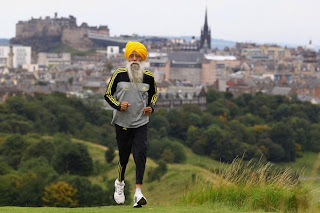 Singh, from London, England, was on the course for 8 hours 25 minutes and 16 seconds. He began competing in marathons at the age of 89 when, following the death of his wife, he started to run "more seriously". At the 2003 Toronto Marathon, he set a world record as the fastest finisher in the men's over-90 age group. He ran as a torchbearer in the 2004 Olympics in Athens, and hopes to do so again in 2012 (London).
Mr. Singh trains by running 10 miles per day, and says "The secret to a long and healthy life is to be stress-free." This is advice applicable to anyone, at any age!
The most fascinating part of this story may be that it seems as though Singh has never considered these tasks impossible, or unattainable. His age is of no question, yet he continues to live each day as though he has years to come. He is outwardly self-motivated, and unstoppable. In fact, he already signed up for his next challenge - the 2012 Edinburgh Marathon.
All of this is not to say that completing a marathon should be the next goal for everyone, nor does it have to be on every Bucket List. But this is the type of story that can be a much-needed reminder, a wake-up call or a kick to get started! It is a reminder that we're often capable of so much more than we think; an indicator that with planning, preparation, dedication and drive, any goal is attainable. Age, gender, perceived athletic ability or any kind of "busy" schedule shouldn't be stopping you from challenging yourself, doing something for yourself each day, and putting your best foot forward!
In the words of George Elliot, proven time and again by Fauja Singh, it is never too late. Get started now!
Sources:http://www.bbc.co.uk/news/world-us-canada-15330421
http://www.associatedcontent.com/article/9050111/100yearold_marathon_runner_an_inspiration.htmlhttp://www.bbc.co.uk/news/uk-15370205http://www.dailymail.co.uk/news/article-2049994/Fauja-Singh-100-smashes-world-record-oldest-marathon-runner.html
At the 2011 Scotiabank Toronto Waterfront Marathon a new world record was set. The 100-year-old runner, Fauja Singh, may have been one of the last competitors to cross the finish line, but he did run the complete 26.2 mile marathon distance and is now the oldest person ever to do so!
Singh, from London, England, was on the course for 8 hours 25 minutes and 16 seconds. He began competing in marathons at the age of 89 when, following the death of his wife, he started to run "more seriously". At the 2003 Toronto Marathon, he set a world record as the fastest finisher in the men's over-90 age group. He ran as a torchbearer in the 2004 Olympics in Athens, and hopes to do so again in 2012 (London).Mr. Singh trains by running 10 miles per day, and says "The secret to a long and healthy life is to be stress-free." This is advice applicable to anyone, at any age!
The most fascinating part of this story may be that it seems as though Singh has never considered these tasks impossible, or unattainable. His age is of no question, yet he continues to live each day as though he has years to come. He is outwardly self-motivated, and unstoppable. In fact, he already signed up for his next challenge - the 2012 Edinburgh Marathon.
All of this is not to say that completing a marathon should be the next goal for everyone, nor does it have to be on every Bucket List. But this is the type of story that can be a much-needed reminder, a wake-up call or a kick to get started! It is a reminder that we're often capable of so much more than we think; an indicator that with planning, preparation, dedication and drive, any goal is attainable. Age, gender, perceived athletic ability or any kind of "busy" schedule shouldn't be stopping you from challenging yourself, doing something for yourself each day, and putting your best foot forward!
In the words of George Elliot, proven time and again by Fauja Singh, it is never too late. Get started now!
http://www.associatedcontent.com/article/9050111/100yearold_marathon_runner_an_inspiration.htmlhttp://www.bbc.co.uk/news/uk-15370205http://www.dailymail.co.uk/news/article-2049994/Fauja-Singh-100-smashes-world-record-oldest-marathon-runner.html
Friday, October 7, 2011
Tips for Making Healthy Meals FAST! and a Perfect Fall Recipe by Coach Katrina

Tips for Making Healthy Meals...FAST!
Plan your meals, make your list, and grocery shop on a regular basis.
Practice healthy cooking techniques.
Cook and freeze. Use leftovers in new ways.
Try a new recipe or new kind of produce each week.
Have FUN and ENJOY your meals with those you love.
Grocery List
Refrigerator Staples
Fresh, sliced fruit and vegetables
Prewashed salad greens
Eggs, lean, low-sodium turkey breast
Low fat/ nonfat cheese, yogurt, milk
High flavor cheeses
Rotisserie chicken
Leftovers from the night before
Freezer Staples
Vegetables and fruit, No sauce/sugar added
Fish, skinless poultry, and lean (or trimmed) meats
Veggie, salmon, turkey burgers
Lean ground poultry and meat
Healthy, low sodium entrees
Whole grain breads, bagels, tortillas
Pre-cooked and portioned homemade soups and entrees
Pantry Staples
Low-sodium or no salt added:
Canned beans/lentils (all types)
Canned tomato products
Fruit (in water/juice only)
Whole grains
Dried beans/lentils
Chunk light tuna (in water), salmon, chicken, clams, sardines
Nuts, seeds, dried fruits
Flavor Enhancers
Vinegars, mustards, hot pepper
Cayenne, crushed red pepper flakes, hot sauce, wasabi
Low-sodium soy sauce
Flavored broth or stock
Grated Parmesan or Romano cheese
Tapenade (olive paste)
Melted anchovies or anchovy paste
Salt-free seasoning blends
Herbs & spices
Citrus juice and zest
Grated ginger, onions, and garlic
Healthy Cooking Tools
Nonstick cookware
Steamer basket insert or microwave
Plastic flexible cutting mat
Hand grater
Veggie peelers
Good chef’s knife and sharpener
Wooden spoons
Silicone spatulas
Baking dishes
Roasting rack with handles
Aluminum foil /parchment paper
Blender or food processor
Slow cooker
Grill or grill-pan
Thermometer
Fall Harvest Quinoa Salad (see picture above)
Easy, quick, and most importantly, delicious, quinoa, chickpeas, and roasted vegetables adds vegan protein and heft to a simple green salad. It’s perfect for lunch or dinner.
Serves 6 as an entrée or 12 as a side dish
Salad Ingredients
1 acorn squash, peeled and diced
1 large red onion, peeled and diced
Nonstick cooking spray
1 tablespoon olive oil
1 tablespoon honey
1 cup quinoa, uncooked
1 ½ cups low fat, low sodium vegetable or chicken stock
½ cup water
½ cup pecans, toasted and coarsely chopped
1 cup chickpeas, rinsed and drained
1/3 cup dried cranberries
3 green onions, thinly sliced
1 large ripe pear, stemmed and cored, cut into bite-sized pieces
¼ cup fresh chopped parsley
2 large handfuls baby spinach leaves
Salt and pepper, to taste
Dressing Ingredients
1 tablespoon extra virgin olive oil
2 tablespoons white wine vinegar
½ teaspoon whole grain mustard
1 tablespoon honey
Salt and pepper, to taste
Directions
Preheat oven to 425 degrees. Place squash and onions on a large baking sheet sprayed with nonstick cooking spray. Toss with olive oil and honey, salt and pepper to taste. Roast for 35 to 40 minutes, or until tender, tossing once while cooking. Meanwhile, cook quinoa according to package directions, using a combination of broth and water (above). Whisk together dressing ingredients in a large salad bowl, and add remaining ingredients. When vegetables are done roasting, add them and the cooked quinoa to the salad bowl, tossing to coat with the dressing. Serve immediately or chill.
Serving size: 2 ½ cups (entrée); 1 ¼ cups (side dish)
Nutrition
405 calories, 1g saturated fat, 0mg cholesterol, 254mg sodium, 1111 mg potassium, 63g carbohydrate, 10g fiber, 13.8g sugar, 11g protein
Monday, September 26, 2011
What’s For Lunch? By Coach Katrina

Fall is officially here, and this time of year is a time for many to get back into the daily grind after months of fun in the sun, and long, lazy days. It’s a perfect reason to get back to packing lunches for the kids AND, just as importantly, for yourself. Already packing for the kids but not yourself? Simply add another bag to the bunch as if you had an extra child.
Why pack?
It’s cheaper. A homemade lunch is better for your wallet than a restaurant or café meal that can cost up to $15, totaling up to $75 per week, and $300 per month! Wow, that’s a lot of savings!
More importantly, a brown-bag lunch is healthier for your body. This is because you control what goes into the bag and if you don’t want mystery meat or hidden dressings, sauces, and spreads, you don’t have to worry. You can save countless calories, sodium, fat grams, and sugar by preparing your own lunch, and by portioning out exactly how much you plan to eat. You may even lose a few pounds!
If you aren’t already brown-bagging it, you may feel intimidated or overwhelmed. Not to worry, here are some tips to consider:
1. Start small. Choose 2 days out of the week that you plan to pack your lunch. Perhaps Monday and Friday are chaotic, but you can manage Tuesdays and Thursdays (if your Mondays and Wednesday evenings are relatively open). This will get you into the habit of packing without causing too much strain.
2. Double up on dinner. If you like hot lunches, then this is a perfect solution. Simply prepare an extra serving of food for dinner and when you are serving your food, have your lunch container empty and ready to be filled. Lunch—done!
3. Stretch out your protein. Leftover grilled fish, lean meats, roasted chicken or turkey, tofu, or even beans make a perfect topping to a bed of pre-washed salad greens or steamable frozen veggies. Pair it with a fruit in its own package such as a banana, orange, apple, or pear, and/or a whole grain roll or a handful of whole grain crackers and you’ve got a meal.
4. Keep it simple. Why not combine reduced fat cheese cubes or slices with ready-to-eat fruits such as grapes and berries, and a handful of whole grain crackers. Similarly, a few tablespoons of peanut butter spooned into a plastic container with a baggie of ready-to-eat baby carrots and a whole wheat pita is just as simple, yet very satisfying.
5. Put safety first. Remember to use a reusable ice pack or, better yet, a frozen water bottle to keep foods cold. By the time the water melts, you’ll be ready to eat (and drink).
As a nutritionist and health coach with a passion for healthy eating, I’m proud to say that I pack my lunch (and afternoon snacks) every single workday. Today, I brought LEFTOVERS—one of my favorite lunch options. Last night, I made a super simple chicken stir fry with frozen colored bell peppers, red onion, garlic, fresh ginger (that I zest from a piece of ginger that’s been in my freezer for weeks), and whole wheat couscous that took 5 minutes to make as I was stir frying the veggies. I had my lunch container ready to go as I was plating up the dinner plates, which made preparing the next day’s lunch that much easier. I will highly recommend my lunch box of choice, a flexible, zip-up 12-can size pack which has an ice pack lining built right in. Simply store it in the freezer overnight, and it’s literally an ice chest that keeps the food cold all day long. I always make sure to throw in a fruit (my favorite is a banana) and a nonfat vanilla Greek yogurt to snack on in the afternoon. Easy, and delicious.
I challenge you to start packing your lunch this week, whether it’s for 2 days or all 5 days. Who knows what benefits you’ll experience from a healthier, cheaper, more delicious, lunch!
Friday, September 16, 2011
What NOT to do at the Gym: 7 Mistakes You Should Avoid by Coach Katrina
 As a personal trainer and passionate exerciser, I spend many hours observing people at the gym, so I am well versed in the biggest mistakes people make when they are trying to get their sweat on. Here are seven of the worst things I’ve seen people do again and again, how to avoid them, optimize your workout, and stay pain and injury-free.
Gym Mistake #1: Doing exercises with improper form, especially squats and lunges. Squats and lunges are one of the biggest calorie burners, and they are portable—you can do them anywhere! The common mistake is to hold your weight in the front toes with the heel coming up off of the ground, and/or allowing the front knee to go beyond the front toe at the bottom of the exercise. This can cause knee pain and injury. Instead, put your weight in the heel of your foot, allowing your toes to freely wiggle inside your shoe. This will also actively engage the gluteus muscles, and so you will feel it in your hamstrings and glutes—just where you want it.
Gym Mistake #2: Doing the same old thing. Varying your routine will keep you mentally engaged and will also continue to challenge the body. You can change your routine by doing any of the following: changing the intensity or effort (increasing the weight, incline, or level), adding or subtracting minutes, choosing a different type of activity, doing the same activities in a different order, or working different muscle groups on different days, allowing overused muscles to rest.
Gym Mistake #3: Using the machines most of the time. While machines can be used occasionally develop strength in certain muscles, they don’t challenge the body the way balanced or core exercises do because they are providing a stable base of support for the body to lean on. Instead, make your body work like a machine by doing exercises that use your own body for resistance, such as push-ups, squats, lunges, and planks. Common gym equipment such as free weights, resistance bands and balls, barbells, and kettle bells also allow the body to use its core muscles for stability. You may even find a TRX suspension system in your gym, which also allows for free-flowing movement.
Gym Mistake #4: Going too heavy or too light. While too much weight can cause injury due to improper form, too little weight is a waste of time. Choose a weight that will allow you to complete between 12 and 15 repetitions, while still maintaining correct form. The last few repetitions should be difficult to complete so that you “fatigue” the muscle. If you are just warming up, or if you are a beginner, using a light weight for one set is a good way to check your form and to get comfortable with the movement.
Gym Mistake #5: Hunching over. Sitting at a desk all day or spending hours in the car can cause the shoulders to round and the back to hunch; often this improper posture is carried into the gym. Trying to do any exercise from this position is a recipe for injury and ineffective movement. To improve your alignment, visualize a long string reaching from the ceiling all the way down your spine to your tail bone. If you roll your shoulders back and down, it can reset your body into correct alignment. This should be your base or set position for starting any exercise.
Gym Mistake #6: The “all or nothing” mentality. The busiest times of year at the gym tend to be January (New Year’s Resolutions), May (prep for swimsuits), and September (end of summer vacation, and back to the daily grind). People will hit the gym hard after months of inactivity; too much stress on a detrained body can cause injury and pain. Don’t bite off more than you can chew! Ease back into your workout routine to gradually train your body into top shape, and keep yourself coming back to the gym by staying free of injury and pain.
Gym Mistake #7: Being a “chest and bi’s” guy or an “abs” girl. If you are only working the muscles that you can actually see, you are missing out on the results you’ll get from getting a full body workout. Strengthening your back muscles doing rows and pull-ups, and your hamstrings by doing squats and lunges can help balance your body out. And, you’ll look good from behind, too!
Subscribe to:
Posts (Atom)